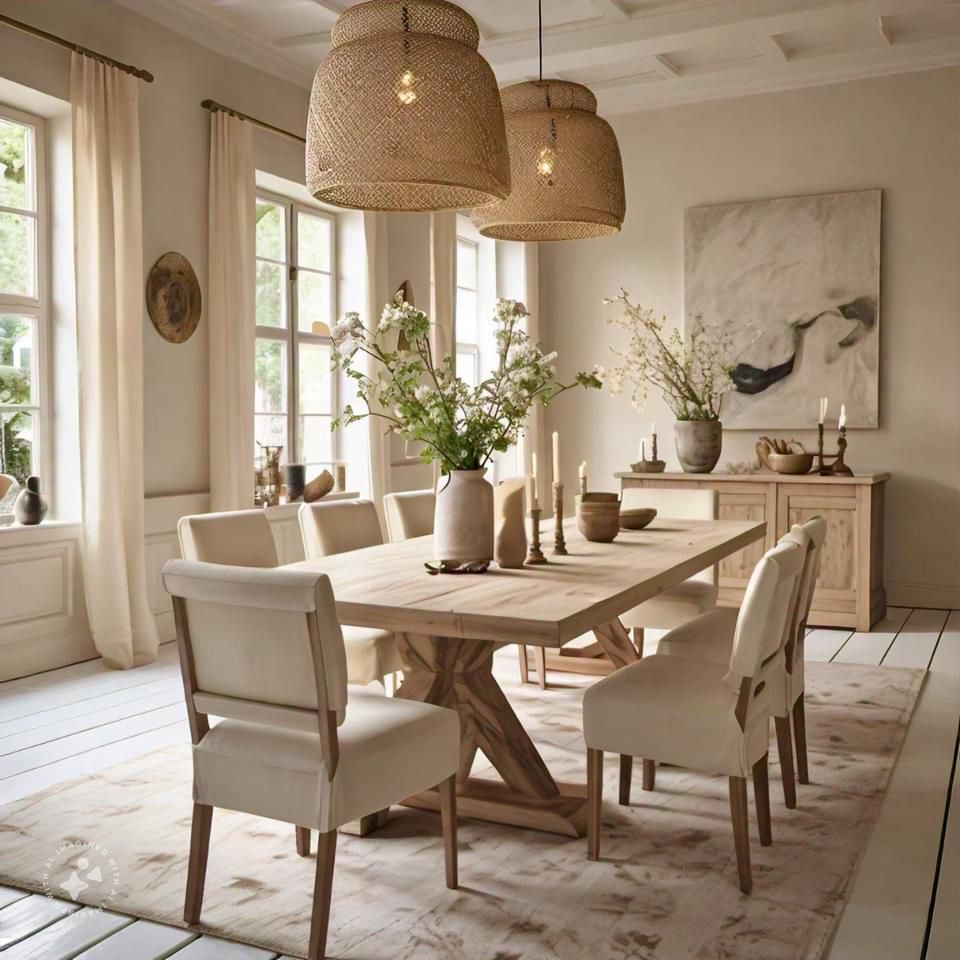
Lighting is a very important point in decoration. To make your dining room amazing, check out these tips!
Lighting is an essential part of any decorating scheme for a specific room. This is because, without adequate light, it is much easier to cause discomfort, and poor visualization of elements, among other disadvantages. Therefore, it is very important to consider everything that makes up a good lighting scheme, especially in the dining room, where family coexistence needs a cozy and pleasant atmosphere to spend with more love.
Natural lighting

To improve the natural light scheme of your dining room, you should promote as much sunlight as possible. After all, he is responsible for keeping the place illuminated during the day. Only through it is it possible to enhance the joy that the environment provides to the people who are there. An important care that must be taken is excessive heat, which can occur due to the high incidence of the sun in the environment, especially in places where this climate is predominant. For natural light to be efficient, you must create opportunities for it to enter the dining room, such as with doors and windows.
In environments with less possibility of natural light entry and in climates that do not receive much sun, the ideal is to use glass as an auxiliary light factor. Use it on doors and windows to enhance sunlight and maintain the strength of natural light, which is affected for other reasons.
Another piece of advice is in relation to curtains, which cannot, in any way, provide more darkness than necessary. In this case, softer and more basic colors such as white or beige and even bright colors between red, yellow, and orange can help the process.
Artificial lighting

Everyone needs to see the decor you’ve thought of for their environment, and artificial lighting elements help convey that message. After all, the idea of bringing them to the dining room is to enhance the decoration even at night where the meals are even more refined and refined.
Ceiling lamps are differentiated items, with discreet and precise light for environments. Ideal for shelves, niches, and very low ceilings.
Lampshades are already popular lighting solutions for many rooms. Taller lamps, which do not need a stand and can be placed directly on the floor, are best suited for a dining room. Use in empty corners.
Extremely romantic, candelabras are items covered in mystery and royalty to be used at a dinner party. Nowadays there are several models of chandeliers that do not need candles but are charged with batteries. Ideal for the dinner table.
Colors
What are colors if not the incidence of light on objects, making our eyes capable of differentiating each of them by a visual characteristic of the reflection? Without well-defined colors, the lighting in your dining room can be greatly affected, mainly due to the help that colors provide in this regard.
It is easy to see how the color tone (lighter or darker) directly influences the lighting, even if it is very well done. Therefore, the most interesting thing is to choose colors for the decoration of the dining room that maintain the tone according to the lighting work carried out in the environment.
Check out some color combination tips to match your dining room lighting:
- Dark lighting for bright environments: Use black and grayscale elements combined with a little white if you want less robust lighting.
- Bright lighting for low-light environments: Play with the color white to maintain comfort.
- Dark lighting for low-light environments: If you want dark lighting and the lighting scheme helps with that, use earth tones in the wood and other elements to keep the environment in that same style.
- Clear lighting for an environment with lots of light: As the environment already collaborates with the lighting, you can safely use colors such as red, orange, and yellow, that is, warm colors that convey joy.
Other items that help with lighting.

Discover some elements that can be integrated into the decoration of your dining room to enhance lighting. Plan your places and use them to contemplate the natural and artificial lights of your scheme:
- Glass: Objects made of glass, such as the tabletop itself, for example, are excellent for providing the feeling of greater space and the reflection of light;
- White color: As we mentioned previously, white is the color with the highest incidence of light and therefore collaborates with your lighting scheme, brightening the place;
- Mirrors: With the same purpose as glass, mirrors improve not only the reflection of light but also the feeling of space in the environment;
- Ceramics: White ceramics are perfect decorative objects to combine with lighting, especially if this is a difficulty in the room;
- Metals: Metals can also reflect light. So remember to also use them in the decorative composition of your dining room.


